

Every development decision is ultimately a risk decision.
Extreme weather volatility now shapes master plans for US developments, lending, and investments. Developers, lenders, and investors now build to—or beyond—standard codes, guided by IBHS's Fortified Program. The outcome of this trend is a greater impact on the feasibility of a project, the budget to construct it, and the long-term value of an asset.
At Developers Research, resilience is now a standard component of our development analytics. We continuously update our pricing and fee database and integrate industry-recognized standards to ensure our cost planning, due diligence consulting, and project management services reflect real-world market expectations.
Today, Fortified is one of the most influential frameworks in resilient construction—and understanding its cost implications is essential for credible project evaluation.
The Fortified Program is a voluntary, beyond-code certification designed to improve the durability of:
Single-family homes
Multifamily projects
Commercial buildings
Its measures target protection against severe weather events such as:
High winds
Hurricanes
Tornadoes
Hail
Heavy rainfall and water intrusion
Unlike traditional code-minimum standards, Fortified introduces higher-performance materials, stronger connections, enhanced water protection, and third-party verification—all designed to reduce structural damage and operational downtime.
Developers Research is currently working with multiple clients across residential, mixed-use, and commercial projects to integrate Fortified requirements. This allows us to benchmark actual market pricing and incorporate verified cost impacts into our feasibility modelling.
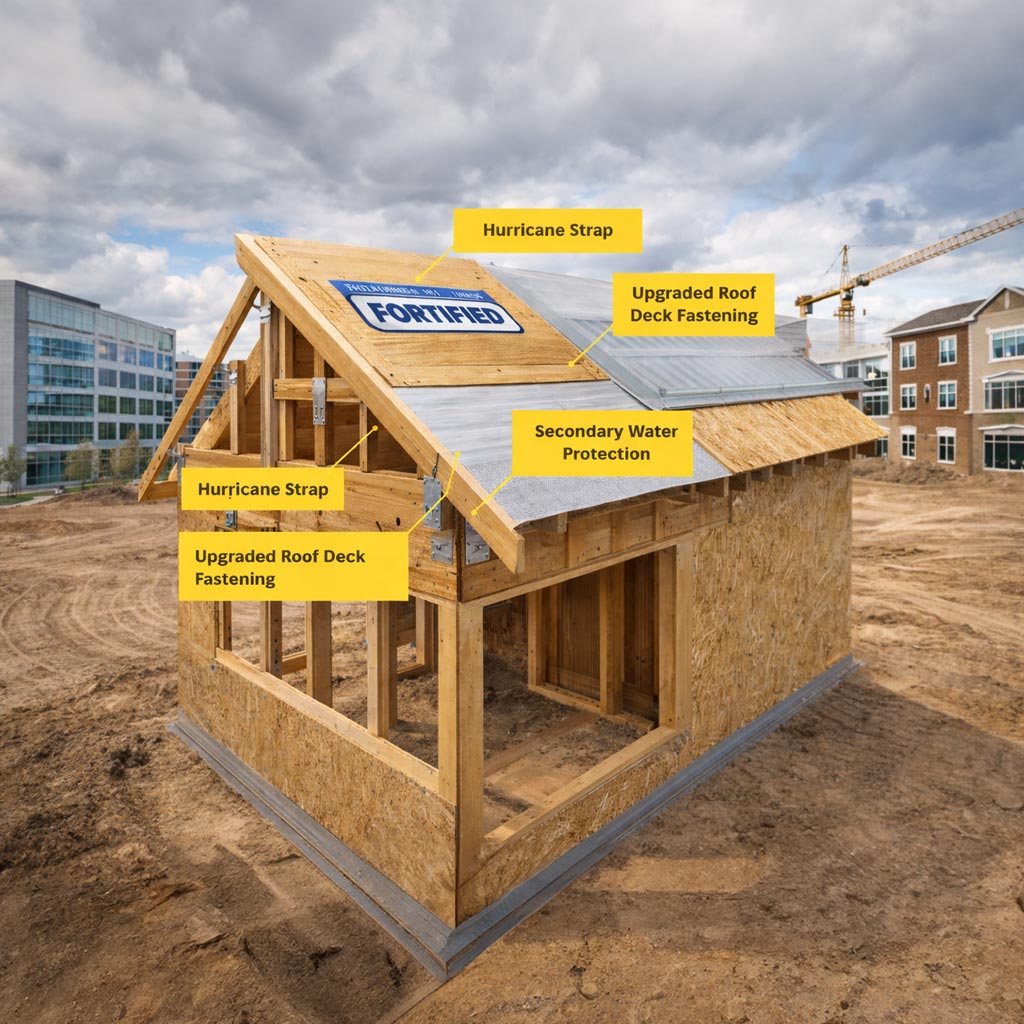
Fortified’s guidelines strengthen vulnerable building components—most notably roofing systems, structural connections, and water barriers.
Examples include:
Upgraded roof deck fastening
Secondary water protection layers
Stronger load-path connections from roof to foundation
Fortified certification requires third-party inspections and documentation at defined construction stages.
Although not universal, many insurers recognize Fortified properties as lower-risk assets. Benefits can include:
Lower premiums
Reduced wind/hail deductibles
Improved insurability for projects in coastal or storm-exposed regions
Lenders increasingly consider resilience when underwriting projects, making certifications like Fortified a strategic advantage—not just a design choice.
The most significant financial benefit of resilience measures is often long-term asset protection, including:
Fewer capital repairs following storms
Lower probability of water intrusion and mold
Reduced operational interruptions
Extended roof and envelope lifespan
Our development consultancy integrates resilience measures directly into:
Development feasibility reports
Cost planning & risk analytics
Project & construction management workflows
For every project, our cost plans include line-item adjustments that reflect the specific Fortified level (Roof, Silver, Gold) and their associated pricing impacts. Our continuously updated, region-specific pricing database delivers construction-ready cost intelligence—not estimates.
This enables stakeholders to:
Understand resilience-driven cost premiums
Compare beyond-code options during early feasibility
Align budgets with insurance and risk-management strategies
Make informed decisions before design is locked in
Resilient construction does increase upfront costs—but it reduces financial exposure across the asset lifecycle. At Developers Research, we help clients quantify these impacts, evaluate alternatives, and design development strategies that are both cost-responsible and future-proof.